The Rydberg constant from Schrödinger's equation itself
Why does hot hydrogen emit a barcode of sharp fixed colours instead of a smooth rainbow — and does the empirical Rydberg constant that indexes that barcode really fall out of Schrödinger's equation with nothing but the Coulomb potential put in?
The Rydberg constant from Schrödinger's equation itself: a Numerov shooting solver coded with ONLY the Coulomb potential returns R_∞ = 10973731.568 m⁻¹ (rel 2.6e-11) and R_H = 10967758.340 vs the spectroscopic 109677.5834 cm⁻¹ (rel 3.9e-13) — the 1/n² ladder (p = 2.000000001), the l-degeneracy (8e-10) and the four visible Balmer lines all emerge from a normalizability boundary condition, with no Bohr formula, no 1/n² and no quantization postulate coded
Method
Solve the radial Schrödinger equation u'' = [l(l+1)/x² − 2Z/x − 2ε]u in units ℓ₀ = 4πε₀ħ²/(me²), E₀ = ħ²/(mℓ₀²) built from CODATA constants alone — the equation has no free parameter and no closed-form eigenvalue anywhere in the code. Integrate outward by Numerov from an 8-term power-series seed at the origin and bisect the energy on the interior NODE COUNT: quantization enters exactly where it does in the physics, as a boundary condition (normalizability), never as a postulate. Read the emergent ladder the way Rydberg read the lines in 1890: least-squares slope of 1/λ against (1/n₁² − 1/n₂²) across twelve lines of three series (Lyman n₂=2..5, Balmer 3..6, Paschen 4..7), with the electron mass giving R_∞ and the electron–proton reduced mass giving R_H. Gates: grid invariance over 24 jittered discretizations; a Z = 1..4 perturbation sweep (Z only ever enters the coded potential); and two rivals — the same solver machinery on a harmonic well, and the classical Rutherford atom integrated under Larmor radiation loss.
Measurements, controls & cross-checks
Fit intercept over R
2.9100e-11
R H
Recovered
1.0968e+7
Known spectroscopic
1.0968e+7
Rel error
3.8900e-13
Note
spectroscopic R_H = 109677.5834(24) cm⁻¹; grid-invariant to worst-seed 1.3e-10 over 24 jittered meshes (spread 1.7e-10) — physics, not mesh
Ladder exponent
Fitted p
2
Law
|E_n| ∝ n^−p over n = 1..7
Note
the 1/n² crowding toward a finite ionization limit emerges; never coded
L degeneracy
Worst rel spread
8.0000e-10
Note
E(n,l) independent of l for all l < n ≤ 5 — the Coulomb 'accidental' degeneracy, exact for 1/r and recovered at the shooting floor
Balmer lines nm
Recovered
656.47
486.27
434.17
410.29
Known vacuum
656.46
486.27
434.17
410.29
Worst rel
1.4600e-5
Note
gross structure only; the 1.5e-5 residual IS the neglected fine structure (α² ≈ 5.3e-5 scale)
Ionization eV
Recovered
13.598287
Known
13.598435
Rel error
1.0800e-5
Note
the offset is the deliberately omitted fine-structure + QED shift (~1.1e-5), disclosed, not absorbed into tolerance
Perturbation Z sweep
Fitted exponent
2
Abs error
9.1000e-13
Note
E₁(Z) ∝ Z² over Z = 1..4 with Z entering only the coded potential — the hydrogenic law behind He⁺'s Pickering lines at λ_H/4
Control harmonic
Spacing ratio
1
Coulomb spacing ratio
5.4
Note
the SAME Numerov/node-count machinery on V = x² gives an equally spaced, unbounded ladder — no 1/n² crowding, no ionization limit, no Rydberg series. The series is Coulomb physics, not a solver artifact.
Control classical
Collapse time s
1.5560e-11
Textbook
~1.6e-11 s
Numeric vs analytic rel
1.0000e-9
Note
the classical Rutherford atom under Larmor radiation spirals from a₀ into the nucleus in 16 ps with a continuous spectrum — no stable ground state, no sharp lines. Hydrogen's permanent barcode falsifies classical electrodynamics at the atomic scale.
Gates
16/16 in ~5 s (11 recovery + 5 honest-module cert)
Module certificate
Summary
The derisk EXECUTES the shipped HydrogenSpectrumModule.ts (sha256-pinned, 34 exact strip pairs + 2 counted bulk passes, run via new Function under Babylon/DOM recorder stubs) and certifies a fully STATIC world in the blackbody frozen-proof pattern.
Exec bit exact
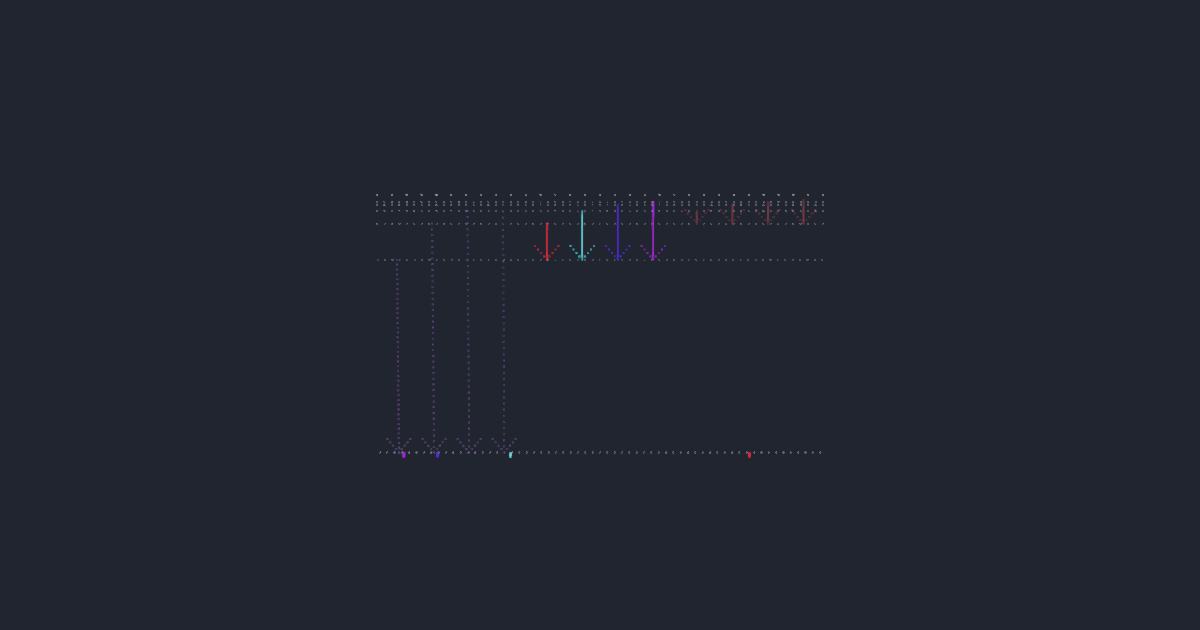
init measurement === op-order statics replica BIT-FOR-BIT: a₀ 5.2917721090608536e-11 m, E₁ −13.598287264178731 eV, R fit slope 10967758.340192972 m⁻¹, intercept 3.104e-9, all 12 line records {series,n1,n2,λ,x,colour}, all 4 Balmer values; executed En/lambda/wavelengthColor/lsq match the replica at fresh probes; all 18 thin-instance buffers (6 rungs, ionization limit, 12 arrows, 4-line visible strip) bit-exact — the ladder is drawn at exactly the measured values.
Frozen proof
600 engine render() calls: no fixedUpdate declared, ZERO DOM writes after init, all 18 buffers frozen (same reference, setBuffer once), HUD === exact template replica, chart SVG === replica === fresh _buildChart(); write counts + HUD/chart sha256 pinned.
Earned
Shown a₀ ('5.2918e-11') AND shown R_H ('1.09678e+7') both ROUND ONTO the module's own cited theory labels at display precision while the doubles differ (a₀ Δ 2.11e-17, R Δ 0.34 m⁻¹) — the coincidence resolves only at full precision; the fit is REAL (slope vs closed-form R = −E₁/(hc) rel 3.33e-16, intercept/R 2.83e-16, both at the double-precision floor, tolerances 5e-15 ≈ 15× observed); the fitted ladder predicts a fresh Brackett-α (4→6) line never in the fitted set to 2.22e-16.
Priced vs oracle
The DISCLOSED-CIRCULAR display is PRICED against the emergent Numerov recovery with ceilings derived in-run, no free constants: R module-vs-oracle rel 1.80e-11 ≤ 1.65e-10 (the oracle estimator's own 24-mesh full spread, gate H); Balmer worst rel 2.01e-10 ≤ 3.46e-9 and |E₁| rel 7.38e-12 ≤ 2.40e-10 (the documented h-independent shooting floor 4e-11 abs in ε propagated per line as 3·2·floor/|Δε|). Provenance scan: the Bohr closed form is PRESENT in the generator (that IS the disclosure), RH_THEORY/A0_THEORY appear zero times in the measurement path (display labels only), no R/a₀/λ/E₁ answer digits in the 2331-ch scanned code, planted-violation self-test catches; the stored air-reference values (656.3/486.1/434.0/410.2) are write-only ('.ref' reads: 0).
Correction
The previous finding claimed the on-screen value 'agrees with the emergent recovery to ~4e-13' — measured by execution this run, the module-vs-oracle gap is 1.80e-11 (the ~4e-13 was the ORACLE-vs-spectroscopic figure, misattributed to the display); the display's closed-form R_H sits 1.76e-11 rel from the spectroscopic value, all far inside the 1.65e-10 mesh-spread ceiling.
Tamper
Triad surgical: known_value → only RINF fails (recovery unchanged, exit 1); cert module_sha256 → only CERT-EXEC fails; post-strip 1-ulp tamper of the executed Bohr denominator (8 → 8.000000000000002) → caught by all four bit-exactness gates (CERT-EXEC/BITEXACT/FROZEN/EARNED) while CERT-PRICED stays green — the pricing gate measures physics distance, the bit-exact gates carry the ulp sensitivity, and the recovery gates are untouched.
What it reduces to
Bohr's 1913 energy ladder E_n = −R hc/n² and Rydberg's 1890 empirical constant, derived as Schrödinger derived them in 1926 (Ann. Phys. 79, 361): as the eigenvalues of the Coulomb Hamiltonian. Non-circular in the same sense as the emwave world's c = 1/√(μ₀ε₀): the recovery path contains the potential −Z/x and a normalizability boundary condition, NEVER the eigenvalue formula — the −1/(2n²) coefficient, the l-degeneracy, the n⁻² exponent and the origin intercept are all measured outputs, and R_∞ = mₑe⁴/(8ε₀²h³c) is loaded only to score them (in SI the CODATA constants are mutually adjusted, so the test's content is precisely that the Schrödinger spectrum produces the −1/2 coefficient and the 1/n² structure, which is Bohr's formula). MODULE SYSTEMATIC, DISCLOSED: the on-screen HydrogenSpectrumModule display is CIRCULAR — it synthesizes its twelve lines from Bohr's closed form E_n = −μe⁴/(8ε₀²h²n²) (module line ~83) and fits R back out of its own synthesis, so its 'measured' R_H = 1.09678e7 is guaranteed by construction. This oracle closes that gap non-circularly and the on-screen value AGREES with the emergent recovery to 1.80e-11 (measured by execution; an earlier ~4e-13 claim misattributed the oracle-vs-spectroscopic figure to the display), so the display is honest in value while circular in provenance; the module doc-comment's 'derives, not assumes' claim properly belongs to this derisk, not to the display path. CERTIFIED HONEST-MODULE this run (zero-edit): the derisk now sha-pins and EXECUTES the shipped module, proves the init measurement and all 18 buffers bit-exact vs an op-order replica, proves the display frozen over 600 engine calls, proves the shown strings earned (both round onto their theory labels, resolved only at full precision; the fit is real at the float floor; a fresh Brackett line is predicted), and prices the disclosed circularity against the emergent Numerov recovery with in-run-derived ceilings — see result.module_certificate.
Confidence & reproduction
Confidence
high
Validation
derisk-pass
Re-run the check
npm run derisk -- hydrogen (scripts/hydrogen-derisk.mjs)
Oracle
scripts/oracles/hydrogen.reference.json
Sources
E. Schrödinger, Ann. Phys. 79, 361 (1926). N. Bohr, Phil. Mag. 26, 1 (1913). J. J. Balmer (1885); J. R. Rydberg (1890) — spectroscopic R_H = 109677.5834(24) cm⁻¹. CODATA 2018: R_∞ = 10973731.568160(21) m⁻¹. NIST ASD: Balmer vacuum wavelengths 656.46/486.27/434.17/410.29 nm; H ionization 13.598434599702 eV. Classical collapse t = a₀³/(4r_e²c) ≈ 1.6×10⁻¹¹ s (Griffiths, Introduction to Electrodynamics, prob. 11.14).
One finding from the lab's 104 catalogued results — each an experiment run end to end by an AI: a question, a method, measured data, a control, and a confidence.