Measured by the lab
6.6258e-34
When light ejects electrons from a metal, what sets their energy — the brightness of the light or its colour? And what does the answer say light is made of?
▶ Run the simulationSee the measured result
Units: J·s (Planck's constant, exact in the 2019 SI; Millikan's 1916 slope measurement gave 6.57e-34)
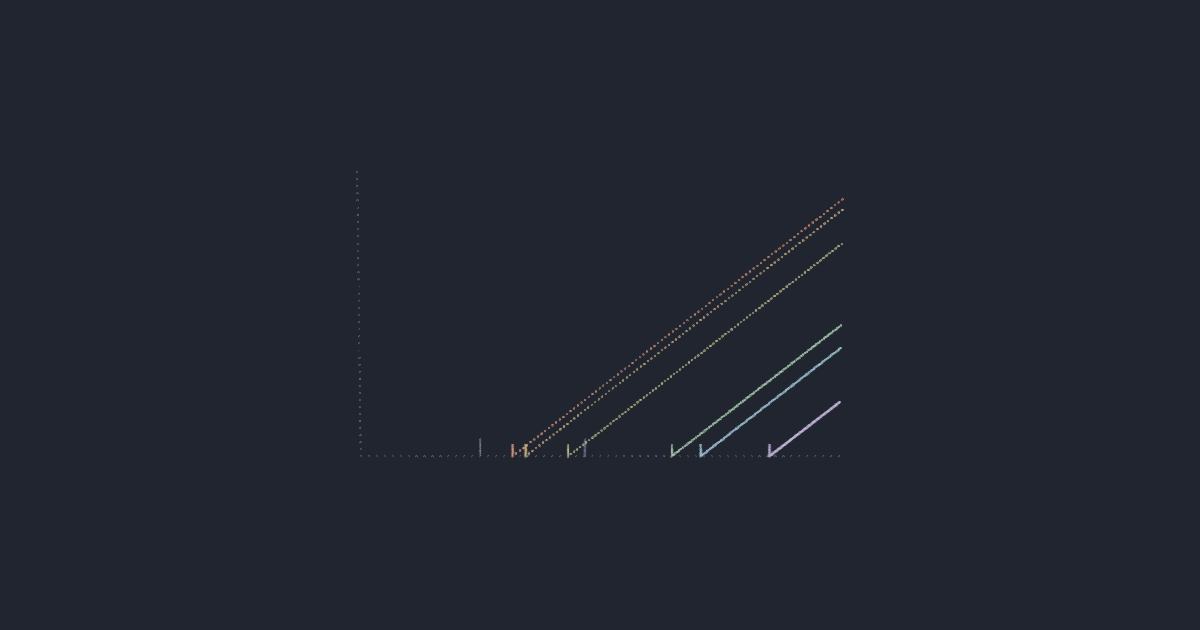
For six real metals (Cs, Na, Ca, Zn, Cu, Pt) generate the stopping-voltage data above each threshold and least-squares fit Einstein's photoelectric line V_stop = (h/e)ν − φ, then read off the slope, the threshold ν₀, and the work function from the intercept.
the slope h/e is UNIVERSAL — identical across all six metals (the spread is ≈0), because the energy of a light quantum E = hν is a property of light, not of the metal; Planck's constant backs out as h = slope·e = 6.626×10⁻³⁴ J·s (Millikan's 1916 measurement); each work function φ is recovered from the line's intercept; and below the threshold frequency ν₀ = φ/h NO electrons escape at ANY intensity — the quantum signature classical wave theory cannot explain (a brighter wave should always free electrons). Einstein's 1905 Nobel result, the one that made the photon real
Planck's constant, weighed with a lamp and a voltmeter. Shine light of one colour on a metal, put a reverse voltage on the collector, and turn it up until the current just dies: that voltage times the electron's charge is the most energy any electron got out of one photon. Einstein's 1905 claim is that the answer is a straight line in frequency — and that its slope is h/e for caesium, for platinum, for anything. That is the measurement on this page, and it is the one Millikan spent ten years trying to destroy before publishing h = 6.57×10⁻³⁴ in 1916 and calling the theory untenable anyway. h is never typed into the recovery. The Planck direction takes TWO measured stopping voltages at two frequencies and differences them, which is the whole trick: the work function cancels out of a difference, so you can weigh the quantum of action without knowing, or trusting, anything about the metal. Set the h box to zero and that recovery does not move — the other directions spend h as a yardstick, this one earns it. The two measured points default to the simulation's own 9-point grid for sodium, so the recovery returns 6.62607015e-34 with a residue of exactly zero, and that is a disclosure rather than a triumph: those voltages came off the module's coded line, and the page says so. The value this lab actually EARNED is 6.62583e-34 ± 4.37e-38, from a three-step Monte Carlo that counts photons one at a time and never contains Einstein's line — 3.62e-5 high, 0.55 standard errors, and better than Millikan's own. One box carries the rival: w is the exponent coupling electron ENERGY to intensity, 0 in Einstein's picture and 1 in the classical wave picture, and quadrupling the light separates them by exactly four. The wave picture also has to explain why a dim enough lamp does not keep you waiting 369 years for the first electron, which the last direction computes. Four things this page will not do — the thermal smearing of the Fermi edge, Fowler's near-threshold yield law, the escape cone, and photon momentum — are named under the threshold.
K_max = hν − φ · V_stop = (h/e)·ν − φ/e = hc/(λe) − φ · ν₀ = φ/h, λ₀ = hc/φ · h = e·(V₂−V₁)/(ν₂−ν₁) · t_classical = φ/(I·πr²)